
Enrollment has never felt noisier.
Prospective students are shopping 3–5 schools at once, inboxes are flooded, and every school is racing to “follow up fast.” Yet despite all that effort, students still ghost, funnels stall, and it’s harder than ever to build real momentum toward enrollment.
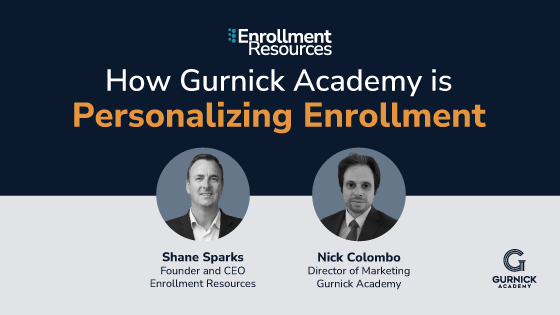
In our recent live session, Shane Sparks (CEO, Enrollment Resources) sat down with Nick Colombo (Director of Marketing, Gurnick Academy) to unpack what real personalization in student recruitment looks like, beyond “Hi, {First Name}.”
Why Personalization in Student Recruitment Matters
We analyzed data from more than 2,200 prospective students who completed a career readiness assessment. The trend was unmistakable. Prospects who received messaging that spoke to their situation, their motivations, and their concerns were far more likely to convert.
“The farther a prospect is deliberately nudged along the journey before they speak to admissions, the higher the conversion rate.”
The Problem With Today’s “Personalization”
Nick pointed out something important. Many schools believe they are personalizing already, but what they are really doing is inserting a first name and program interest into a template. When a student requests information from several schools, the follow-up usually sounds identical.
Add speed-to-lead pressure on top, and you get what Nick calls “hit over the head messaging” – lots of outreach, very little empathy. It’s no wonder prospects start dodging calls and feeling like they made a mistake by inquiring.
Go Beyond Demographics: Psychographics, Social Styles & Motivation
To personalize well, schools need to go deeper into psychographics like what a student hopes for, what worries them, how they communicate, and what they value.
Social Styles: Matching Message to Personality
One of the most practical psychographic tools is the social styles model used in Virtual Adviser lead funnels. This identifies a student’s personality type, and once you know that, you can shift tone and structure in a way that feels natural to them.
- Expressive students tend to respond to stories, visuals, and emotional framing.
- Analytical students want details, clarity, and bullet points.
- Drivers want direct information and next steps.
- Amiable students appreciate reassurance and a calm, friendly tone.
Same program. Same outcome. Completely different packaging.
Motivations: Why They’re Really Applying to School
Motivation plays a major role in how students make decisions. Shane shared insights from thousands of quiz results, showing that motivations shift depending on a person’s stage of life.
Working students tend to focus on advancement and income. They want a stronger career path or a way to move out of their current job. Students who are unemployed often put more weight on meaning, direction, or a fresh start.
Age also changes the equation. Younger prospects are driven by interest and personal identity. Older students are more practical and are thinking about stability and long term security.
If you know why someone is considering school, the way you follow up with them becomes more purposeful.
Program Personas: A Better Way to Shape Messaging
Two programs might look similar demographically (age band, gender, location), but psychographically they’re very different. Shane walked through one example that illustrates why “one program page fits all” doesn’t work. For example, Cosmetology attracts younger, expressive, creatively-driven students. While, medical, billing and coding tends to attract older, analytical students who want stability and reliable income.
If all your programs use the same messaging, no audience gets what they need. Program-level personas help schools shape tone, examples, and calls to action in a way that fits the student’s worldview.
Mystery Shop Your Own Funnel
Nick’s top recommendation was surprisingly simple.
“Go through the process yourself. Fill out your own inquiry form. Fill out competitors’ forms. Take your own quiz. Notice the volume, tone, speed, and pressure.”
Once you experience what prospects experience, you immediately see what needs to change. This is one of the fastest ways to uncover messaging gaps and opportunities for improvement.
Practical Student Personalization You Can Start Today
You don’t need a giant tech stack to start building personalized enrollment journeys. Nick and Shane suggested simple, high-leverage moves:
1. Collect Better Data Upfront
Add smarter questions to your lead funnels that create simple but powerful segmentation that transforms how you follow up.
- “What’s your biggest concern about going back to school?”
- “How soon are you hoping to start?”
- “What’s the main reason you’re considering training?”
2. Acknowledge What Students Already Told You
This basic acknowledgement alone makes a student feel seen and respected, not processed. For example, reach out with a message like:
“Thanks for taking a few minutes to fill that out. I see you’re worried about [childcare / cost / failing] and that you’re interested in [program]. Let’s talk about that first.”
3. Write Content Around Obstacles
Creating content around common obstacles is another reliable strategy. Short articles, FAQs, or resources can become helpful links for emails, texts, and advisor conversations. Consider the following areas of concern:
- Childcare
- Transportation
- Work schedule
- Finances
- Fear of failure or returning to school
4. Match Channel to Purpose
Nick also highlighted the importance of using communication channels with intention. Each channel plays a different role.
Text
- Short, human, familiar.
- Great for priming or reinforcing
- Best for longer stories, details, links, and resources.
- Good place to use motivation/obstacle-based personalization.
Phone
- Where true 1:1 personalization happens.
- Use quick AI summaries (from tools like Virtual Adviser) to frame the conversation around their motivations and obstacles.
5. Start Small With Segmented Campaigns
Schools sometimes feel they need to build dozens of personalized journeys at once, but the most successful teams start small. Test one variable at a time.
- Social style (expressive vs analytical), or
- Motivation (advancement vs meaningful work vs money)
This gradual approach makes personalization manageable and creates clear data about what is resonating. As Nick put it, “Personalization is meeting the student where they are. Everything else is just a means to that end.”
The Core Insight: Personalization Is Human
Students want to feel understood. They want to feel acknowledged and validated, not pushed. Personalization is not about fancy tech or complicated workflows. It is about meeting people where they are and showing that you see their situation clearly.
When schools do that well, everything downstream improves.
Watch the Full Webinar
If you want to explore the full conversation, including program examples, data breakdowns, and how Gurnick uses these insights in their day to day work, you can watch the full replay here.